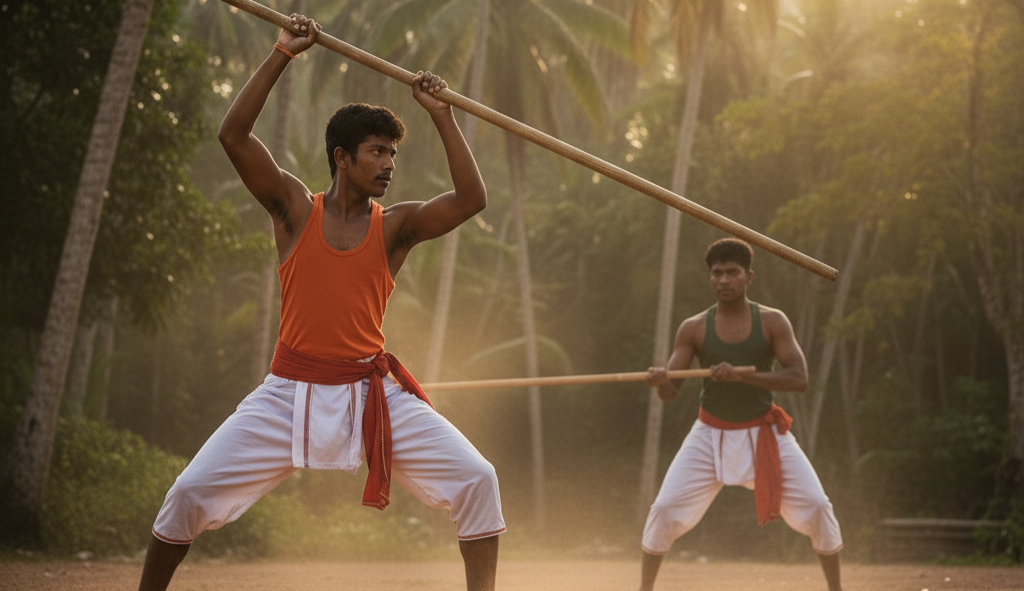
Silamban, aka Chilambattam, is one of the ancient and oldest martial arts forms with silambu (staff) as the prominent weapon. While some reports claim that the origin of this art form dates back to 1000 BCE, others claim that it has been in practice since the 4th or 2nd century BC. Regardless, this is a unique marital art that teaches you discipline, fitness, and agility. According to us, these three traits are the pillars that can define the future generation.
Thus, every child in India must feel proud and get curious enough to learn Silambam, the defense art form. Moreover, archeological reports say that this art form was brought to us by the great saint Agastya, who hailed from Tamil Nadu, India. And today, the AISF (All India Silambam Federation) has approved around three hundred Silambam schools or centres that teach this amazing art form to children and adults with its certified coaches and trainers.
Before we get into the training and the stages of Silambam coaching, let’s touch base on the weapons used.
Weapons used in Silambam learning
1. Silambu (Staff): the primary Silambam weapon made of bamboo or teak wood
2. Panthukol: silambu with fireballs in the edges
3. Kuttu katai: a spiked knuckleduster
4. Kathi: a knife
5. Savuku: a whip
6. Vaal: a curved sword
7. Maru: made from deer horns
8. Kattari: a H-shaped dagger
9. Sedikuchi: a short wooden stick
10. Aruval: a machete or sickle
How to learn from Silambam classes?
Every school has a different approach to teaching Silmabam. Irrespectively, the basics, foundations, techniques, and skills remain the same throughout the entire training journey. So, Silambam aspirants need not worry about the approach but only focus on the skill and try to excel in the same.
The step-by-step approach
Step 1: The very first step in this martial art is to condition the body for flexibility and agility, and to learn the footwork.
Step 2: The next phase is to learn the techniques and skills
- Strikes: quick movements to create a shield and also attack
- Blocks: the movements that help to deflect and neutralize the attack
- Stances: these are the postures for defensive and offensive moves
- Sequences: a combination of footwork, handwork, and weapons
Step 3: Once the body is trained and conditioned, the partner drills and sparring sessions begin.
The ranking approach
Some Silambam classes follow coaching based on the individual’s rank or the color of the belt, like in Karate. Upon cleaning every rank, they get a chance to learn the next technique or defense mechanism.
Silambam classes in Keelkattalai
Living in Chennai, you must feel lucky to have several Silambam schools and coaching centres. However, if you’re someone who is interested in this martial art or if you’re a parent willing to make your kid learn this martial art, ensure you choose the right school from the vast options that you may have. Why?
The quality of coaching is what matters as the individual grows and learns the advanced grades in this art form. So, choose the best silambam classes in Chennai that offer all the levels or grades from the basic ‘4 Veedu Salaam Varisai’ to the foundational ‘8 Veedu’ to the advanced ‘12 Veedu.’ For example, choose schools like Rafa Academy, wherein expert trainers make you learn step-by-step and ensure high safety.